Skip to main navigation menu Skip to main content Skip to site footer

Volume 3Enero - Diciembre 2013

Published September 1, 2025

Issue description

Enero - Diciembre 2013

Articles

  1. Overlay Tester: Laboratory Equipment to Evaluate the Crack Resistance in Asphalt Mixtures

    The crack resistance should be an issue to take into account in the performance of the asphalt mixture, which has to resist permanent deformation, fatigue and moisture damage. Cracks appear in flexible pavements through two failure mechanisms: reflective cracking and fatigue.

    The reflective cracking is a type of failure that has received less attention than fatigue cracking. This form of distress should be consider when selecting the asphalt mixture as overlay, to be placed on rigid pavements stabilized bases or simply when the existing layer is very cracked. It is well known that existing cracks propagate to the top layer causing the water to infiltrate causing the rapid deterioration of the pavement structure.

    This article focuses on the implementation of the overlay test, which is a very practical method which gives enough information about the characteristic cracking of asphalt mixtures, from the beginning of the crack until its propagation behavior, it´s also sensitive enough to measure the changes in the type and asphalt content to discriminate between various types of asphalt mixtures.
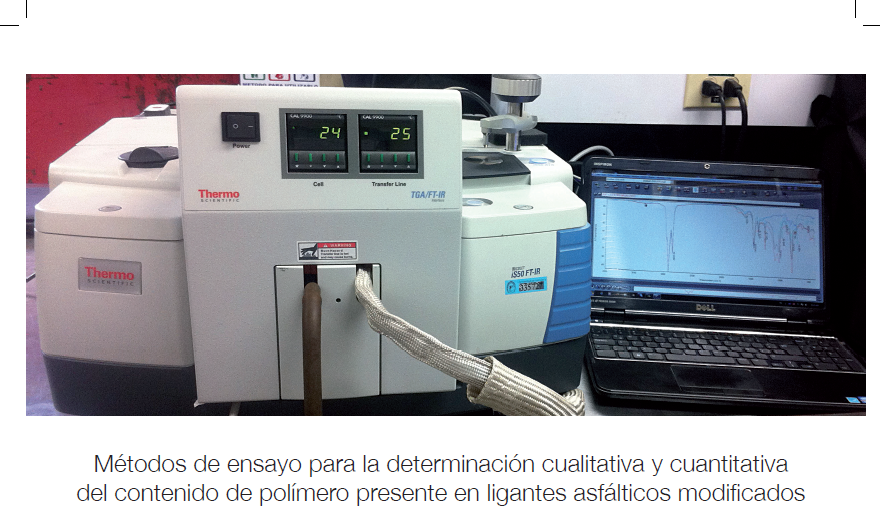
  2. Test Methods for Qualitative and Quantitative Determination of the Polymer Content Present in Modified Asphalt Binders

    Costa Rica, as many countries, are implementing the use of polymer-modified asphalts for road construction, the growing market offers several types of polymers that improve the rheological properties of asphalts, significantly. The most common polymers are SBR, SBS, tire rubber in powder, EMA and EVA among others. The modifiers percentages are between 1% to 5 % m/m of the asphalt binder. However, little research has been conducted for quantifying the amount of polymer incorporated into the asphalt binder.

    Accordingly, the methods to determine qualitatively or quantitatively the presence of polymers present in the asphalt are the objective of this. This article is aimed to asphalt binder’s laboratories, mainly, but also to engineers and professionals working on road construction and Quality Assurance.

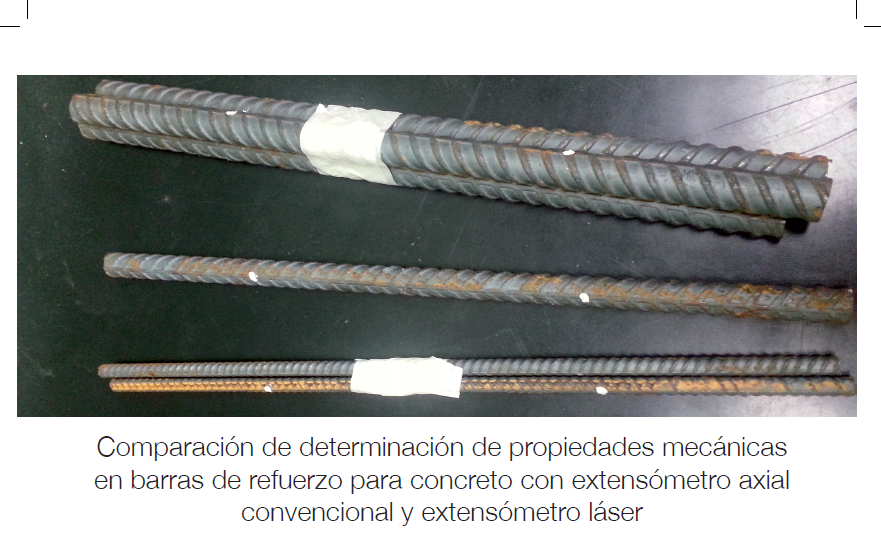
  3. Comparison of determination of mechanical properties in reinforcing bars for concrete with axial extensometer conventional and laser extensometer

    The current article describes the testing process and analysis of 40 deformed steel bars for concrete reinforcement, which where instrumented with a conventional extensometer and a laser extensometer simultaneously. A statistical analysis was used to determine the accuracy of the measurements and data calculated from the laser extensometer's output information in comparison with that of the conventional extensometer. The observed behavior determines that the laser extensometer indicates different results when used to determine the elasticity modulus, however, it does not lead to significant differences for the determination of all the mechanical properties required by the ASTM standards A615 and A706.

  4. Effect of the Capping Materials in the Resistance to Compression of Concrete Cylinders

    The objective of this research is to evaluate the relationship between the type of capping of cylindrical concrete specimens and their respective final value of compressive strength, so that to determine compliance by the method used . We studied three possible methods for making the faces of the cylinder, the first involves placing a mixture of gypsum-cement hardened specimens, the second is to place a mixture of Portland cement made with fresh specimens and the latter refers to the preparation of hardened faces of the specimens by the respective polishing. As a main point of comparison have cylinders with polished faces, considered the most representative, since the failure load is applied directly to the specimen, then analyzed the results of compression of the other elements. As a final result of the research, there is not a significant difference in the value of unconfined compressive strength, therefore the three methods for preparing the faces of the cylinder are acceptable.